


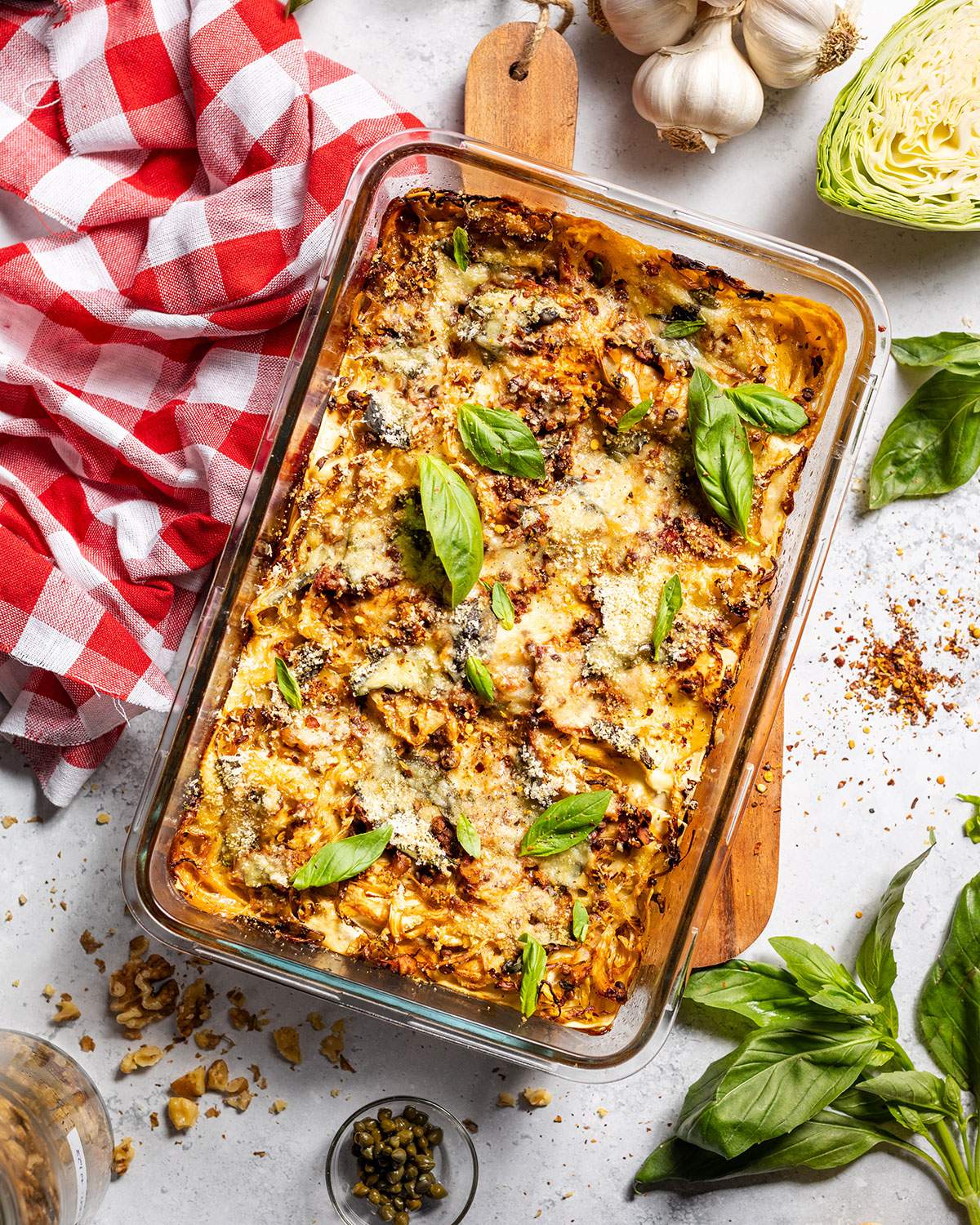
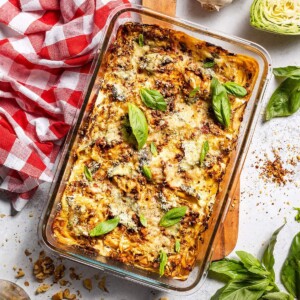
This cabbage and walnut lasagna layers a savoury cabbage and walnut filling with lasagna sheets, rich tomato sauce and creamy vegan béchamel.
The walnuts add texture and richness, while slowly cooked cabbage becomes soft, slightly sweet and deeply savory.
❤️ Why You'll Love This Cabbage Lasagna
- A different way to use cabbage: Especially useful when readers have most of a cabbage left after another recipe.
- Rich and satisfying: Walnuts give the filling a hearty texture without relying on vegan mince.
- Great for preparing ahead: The lasagna can be assembled in advance and baked later.
- Freezer-friendly: Either freeze the assembled lasagna or individual cooked portions.
- Ideal for sharing: A useful family dinner, weekend meal or dinner-party main.
Jump to:
🌱 Ingredients & Notes
Here are the main ingredients you’ll need to make this cabbage and walnut lasagna.
You can find the complete measurements in the recipe card at the bottom of the post.
- Cabbage: White or green cabbage works particularly well here. Slice it thinly so it softens evenly and blends into the filling rather than leaving you with large, chewy pieces. Savoy cabbage can also be used, although it may cook slightly faster.
- Walnuts: These give the filling its hearty texture and a subtle nutty flavor. Chop them into small, irregular pieces or pulse them briefly in a food processor. Avoid blending them into a fine powder.
- Onion and garlic: These create the savory base of the cabbage filling. Cook them until softened before adding the cabbage.
- Tomato sauce: The tomato layer adds moisture and acidity, balancing the richer walnut filling and creamy béchamel. Allow it to simmer until thickened so the finished lasagna does not become watery.
- Lasagna sheets: Check the instructions on the package before assembling the lasagna. Oven-ready sheets can be added directly, while some dried sheets may need to be boiled first.
- Vegan béchamel: This creamy white sauce keeps the lasagna moist and helps bind the layers together. Use an unsweetened, unflavored plant milk so the sauce does not taste sweet.
- Vegan cheese: Use a grated vegan cheese that melts well. This is added to the top for a golden, bubbling finish.
- Fresh basil: A few basil leaves add freshness when serving and help balance the rich sauces.
- Salt and black pepper: Season the cabbage filling and béchamel separately before assembling. This makes it much easier to build flavor throughout the lasagna.
Scroll to the recipe card at the bottom of the post for detailed quantities and measurements.
🔪 Equipment
Here is all the equipment you need to make this recipe:
- Large skillet / frying pan
- Ovenproof baking dish (20×30 cm) - grease it lightly before layering.
- Sharp knife & chopping board
- Citrus zester
- Wooden spoon or spatula
- Colander / sieve - to drain and rinse lentils.
- Optional: Small bowl - To mix walnuts with oil and chilli flakes before adding to the sauce for more even caramelisation.
🍲 How to Make Cabbage and Walnut Lasagna
There are three main components to this recipe: the cabbage and walnut filling, the vegan béchamel and the lasagna itself. Preparing each component before you begin assembling makes the layering process much easier.
Prepare the filling
Heat the oil in a large skillet over medium heat. Add the onion and cook until softened, then stir in the garlic.
Add the finely sliced cabbage in batches, allowing each batch to soften slightly before adding more. It may look like a lot of cabbage at first, but it will reduce considerably as it cooks.
Continue cooking until the cabbage is tender and most of its moisture has evaporated. Stir in the chopped walnuts, followed by the tomato ingredients and seasonings.
Leave the mixture to simmer until it is thick and spoonable, with no watery liquid collecting at the bottom of the skillet. Taste and adjust the seasoning before removing it from the heat.
Make the béchamel
Melt the vegan butter in a saucepan over low to medium heat. Add the flour and whisk until smooth, then cook for about one minute to remove the raw flour taste.
Gradually pour in the plant milk, whisking continuously. Adding the milk slowly at the beginning helps prevent lumps from forming.
Continue cooking and stirring until the sauce has thickened enough to coat the back of a spoon but is still easy to pour. Add the remaining béchamel seasonings, then taste and adjust with additional salt or pepper as needed.
Should the sauce become too thick, whisk in an extra splash of plant milk. It will continue to thicken as it cools and again while the lasagna bakes.
Assemble the lasagna
Spread a thin layer of the cabbage and tomato filling across the bottom of your baking dish. This prevents the first layer of pasta from sticking and gives it enough moisture to cook.
Arrange a layer of lasagna sheets on top, breaking or trimming them where needed to fit the dish. Add another layer of cabbage filling, followed by some of the béchamel.
Continue layering the lasagna sheets, cabbage filling and béchamel until the ingredients have been used. Finish with a final layer of pasta and enough béchamel to cover it completely.
Sprinkle the vegan cheese over the top, along with a few additional chopped walnuts if using.
Bake and rest
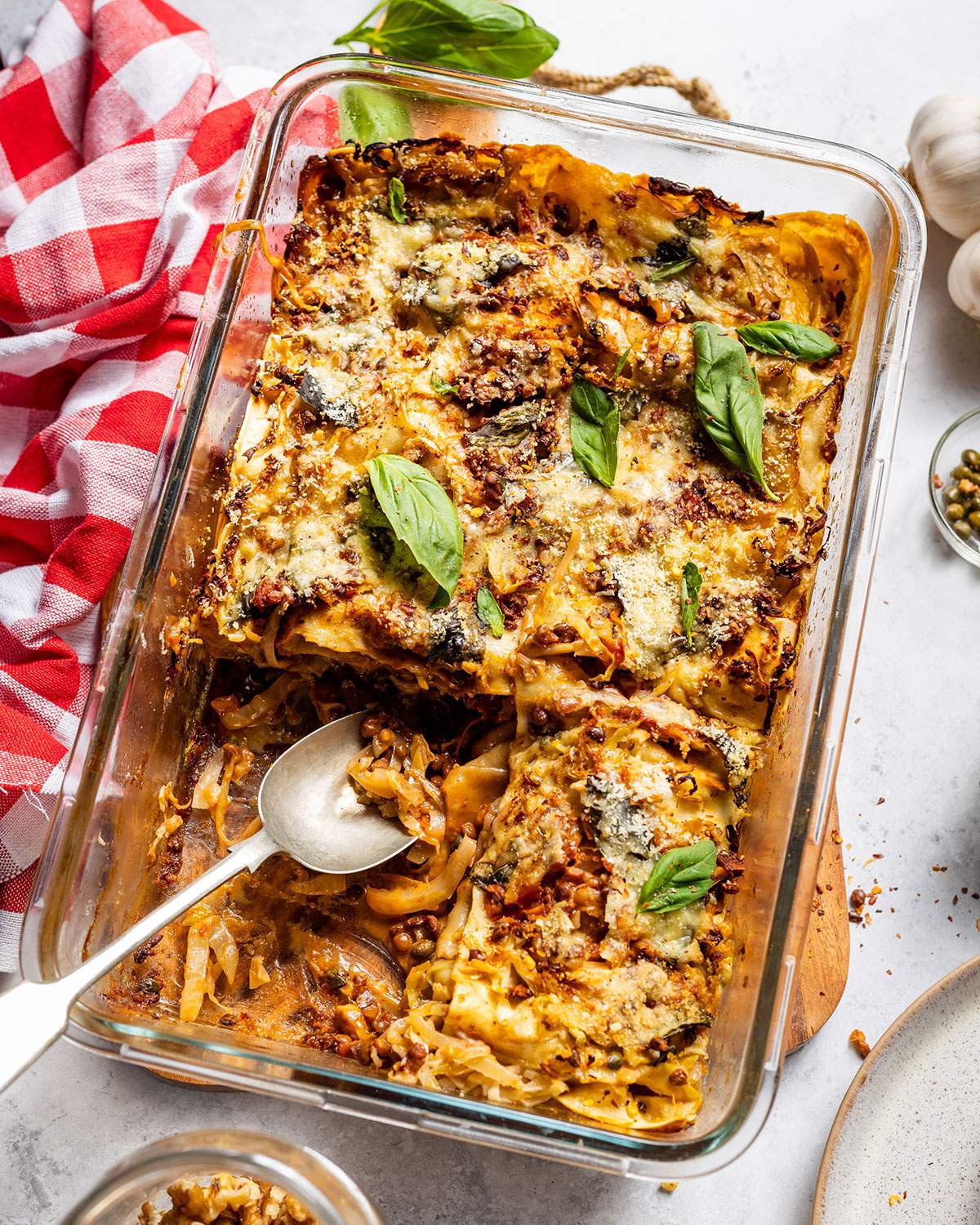
Cover the baking dish and bake the lasagna until the pasta is tender and the sauce is bubbling around the edges.
Remove the cover for the final part of the baking time so the top can become golden. Should it begin browning too quickly, loosely cover it again.
Insert a sharp knife through the center to check the pasta. It should pass through the layers without meeting any firm or crunchy sections.
Once baked, allow the lasagna to rest for at least 10-15 minutes before cutting into it. This gives the sauces time to settle and makes the portions much easier to lift from the dish.
💡 Recipe Tips
- Slice the cabbage thinly: Thick pieces take longer to soften and can make the filling more difficult to layer.
- Cook away the excess moisture: Cabbage releases water as it cooks. Continue cooking until the mixture is thick rather than soupy before assembling the lasagna.
- Keep some texture in the walnuts: Chop or pulse them into coarse crumbs rather than turning them into walnut flour.
- Use unsweetened plant milk: Sweetened or flavored plant milk can noticeably change the flavor of the béchamel.
- Keep the béchamel pourable: It should be thick enough to coat a spoon but loose enough to spread easily over the pasta.
- Check your lasagna sheets: Preparation and cooking times vary between brands, so always check whether yours are oven-ready.
- Cover every piece of pasta: Any exposed corners may become dry or crunchy in the oven. Make sure the final sheets are completely covered with sauce.
- Season as you go: Taste both the filling and béchamel before assembling. Once the lasagna is layered, it is much harder to correct the seasoning.
- Do not skip the resting time: The lasagna may look very saucy straight from the oven. Resting allows the layers to firm up without drying them out.
❄️ Make Ahead, Storage and Reheating
Make ahead
The cabbage filling and béchamel can both be prepared in advance. Allow them to cool, then store them separately in covered containers in the refrigerator for up to two days.
You can also assemble the complete lasagna up to 24 hours before baking. Cover the dish and refrigerate it, then bake when needed. A refrigerated lasagna may require a little additional time in the oven.
Storing leftovers
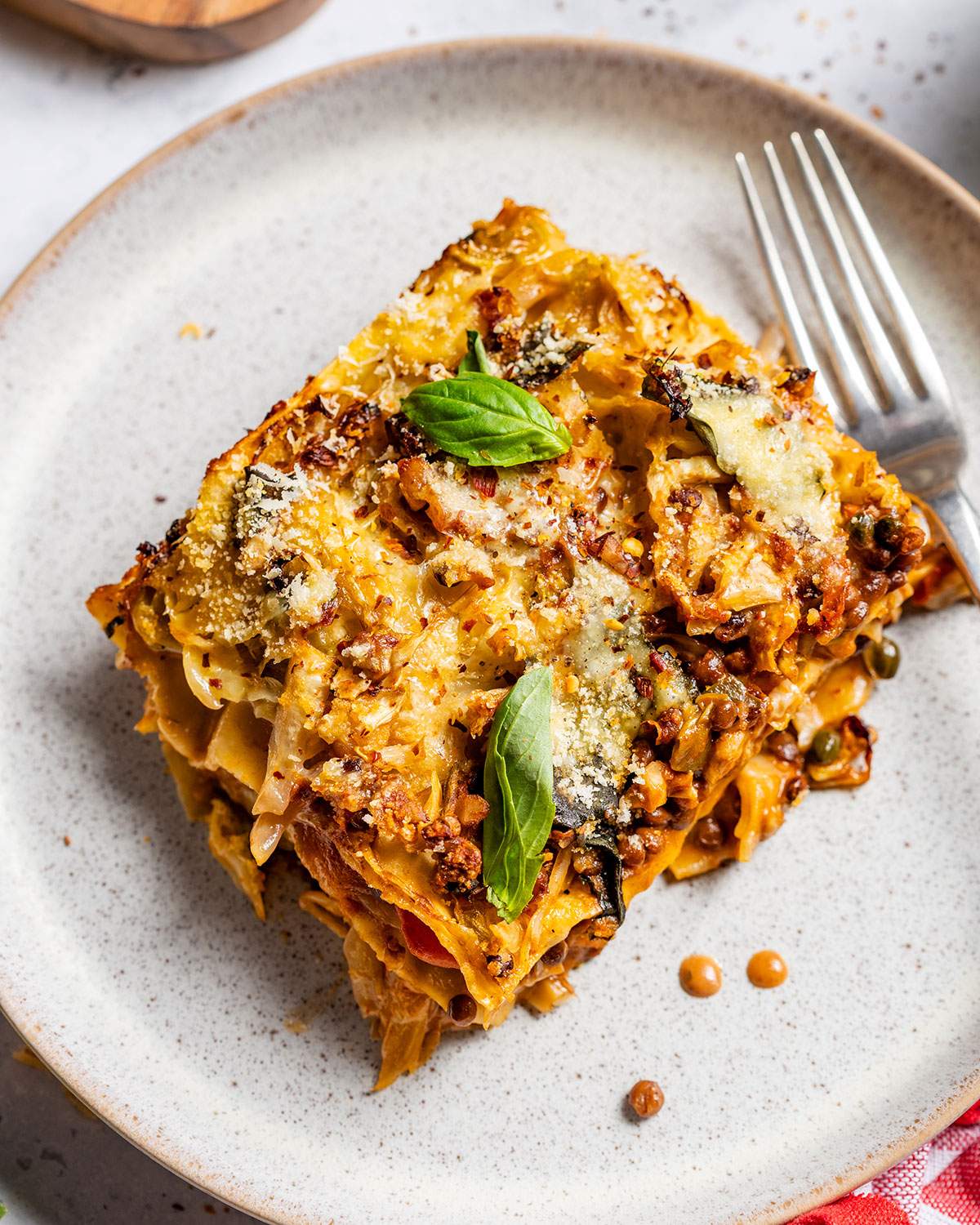
Allow any leftover lasagna to cool before transferring it to an airtight container or covering the baking dish. Store it in the refrigerator for up to three days.
Individual portions are particularly convenient for quick lunches and tend to reheat more evenly than the whole dish.
Reheating
Reheat individual portions in the microwave until piping hot throughout. Covering the portion helps prevent the pasta from drying out.
For several portions, cover the baking dish and reheat it in a preheated oven at 350°F/180°C until hot in the center. Remove the cover for the final few minutes if you would like to refresh the top.
A small spoonful of water or tomato sauce added around the edges can help if the lasagna appears dry after refrigerating.
Freezing
The lasagna can be frozen either assembled and unbaked or after baking.
For leftovers, allow the lasagna to cool completely before freezing individual portions in freezer-safe containers. Freeze for up to three months and defrost overnight in the refrigerator before reheating.
An assembled, unbaked lasagna should be wrapped tightly to protect it from freezer burn. Defrost it in the refrigerator before baking, then allow extra cooking time because the center will still be cold.
🥗 What to Serve With It
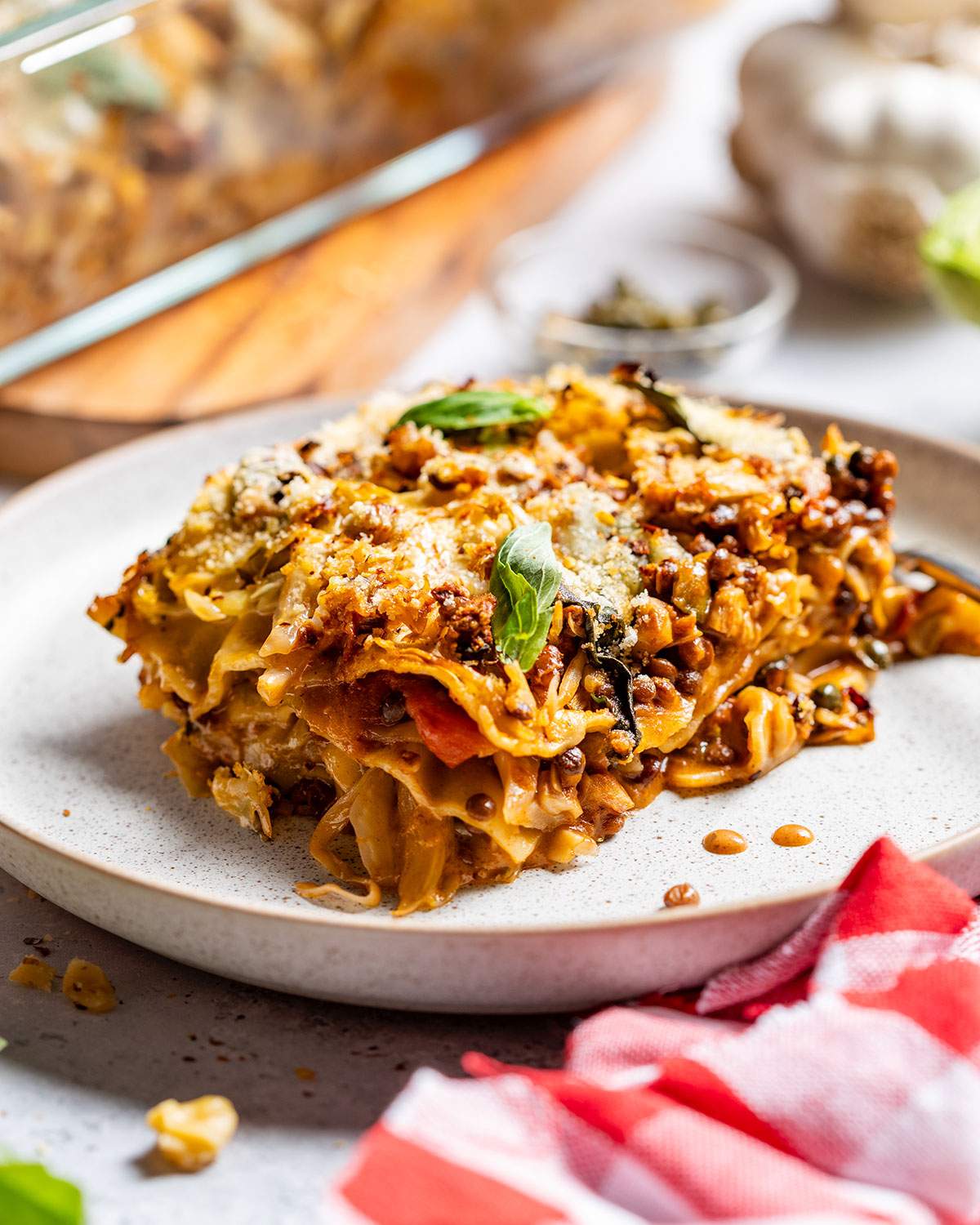
This cabbage and walnut lasagna is filling enough to serve as a complete main meal, but something fresh or crisp on the side works particularly well with the creamy layers.
Try serving it with:
- A simple green salad with a sharp lemon or balsamic dressing
- Garlic bread or crusty bread for scooping up the sauce
- Steamed green beans, broccoli or tenderstem broccoli
- Roasted vegetables
- A fresh tomato and basil salad
- An extra sprinkle of vegan Parmesan and fresh basil
📌 If you love Pinterest you can pin any of the images to your boards!
❓ Frequently Asked Questions
White or green cabbage works particularly well because it softens while retaining enough texture to give the filling some bite. Savoy cabbage can also be used, but it cooks more quickly and may create a slightly softer filling.
That depends on the type of lasagna sheets you are using. Oven-ready sheets can be layered directly into the dish. If the package instructs you to precook them, boil them until flexible before assembling the lasagna.
Make sure the pasta is fully surrounded by sauce, as it needs moisture to cook properly.
Yes. Assemble the lasagna, cover the dish and refrigerate it for up to 24 hours before baking. Because it will be cold from the refrigerator, it may need a little longer in the oven.
The cabbage may not have been cooked for long enough before the lasagna was assembled. Cabbage releases a considerable amount of moisture as it softens, so continue cooking until the liquid has evaporated.
A tomato filling or béchamel that is too thin can also make the lasagna loose. The filling should be thick and spoonable, while the béchamel should coat the back of a spoon.
The walnuts are a key part of the texture, so removing them will change the finished dish.
Finely chopped sunflower seeds are one possible alternative, although the flavor will be different.
Cooked lentils could also be used to create a hearty filling, but the amount and seasoning may need adjusting.
Yes. Freeze the assembled lasagna before baking or freeze cooked individual portions once completely cool. Defrost it overnight in the refrigerator before baking or reheating.
Yes. Fresh sheets generally do not need to be boiled and may cook more quickly than dried pasta. Check the package instructions and begin testing the lasagna slightly earlier.
Did you make this recipe? If so, will you do me a huge favor and leave a review and star rating & let me know how you liked this recipe? THANK YOU! ❤️
🔜 More Veg-Loaded Dinner Recipes
Here's a handy recipe card that you can print out and keep in your kitchen for easy reference:
📖 Recipe Card
Vegan Cabbage and Walnut Lasagna

Ingredients
For the cabbage
- 1 large Savoy cabbage tough core removed and leaves finely shredded
- 1 tablespoon extra virgin olive oil
- Salt and freshly ground black pepper to taste
- Finely grated zest of 1 lemon
For the walnut and lentil tomato sauce
- 1 tablespoon extra virgin olive oil
- 2 garlic cloves minced
- 1 teaspoon chili flakes or less to taste
- 50 g walnuts roughly chopped
- 2 tablespoons capers drained
- 2 x 400 g cans chopped tomatoes
- 1 x 400 g can lentils drained and rinsed
- 1 large handful fresh basil leaves roughly torn
- Salt and freshly ground black pepper to taste
For assembling
- A little olive oil for greasing
- 250 g dried lasagna sheets
- 250 g vegan mozzarella grated
- 50 g vegan Parmesan finely grated
- 2 tablespoons breadcrumbs
- Fresh basil to serve, optional
Instructions
- Preheat the oven to 400°F/200°C, or 180°C fan. Lightly grease a deep 8 x 12-inch/20 x 30-cm baking dish.
- Heat 1 tablespoon of olive oil in a large skillet over medium heat. Add the shredded cabbage, season with salt and black pepper and cook until wilted and tender, stirring regularly.
- Stir through the lemon zest, then transfer the cabbage to a bowl and set aside.
- Return the skillet to medium heat and add the remaining tablespoon of olive oil. Add the garlic and cook briefly until fragrant.
- Stir in the chili flakes and chopped walnuts. Cook, stirring regularly, until the walnuts are fragrant and lightly toasted around the edges. Add the capers and chopped tomatoes. Cover and simmer for 5 minutes.
- Stir the drained lentils and torn basil leaves into the tomato sauce. Season with salt and black pepper, then taste and adjust the seasoning as needed.
- Meanwhile, prepare the lasagna sheets according to the package instructions. If you are using oven-ready sheets, they can be added directly to the lasagna without precooking.
- Spread approximately one-quarter of the tomato sauce across the bottom of the prepared baking dish. Sprinkle over a little of the vegan mozzarella and cover with a layer of lasagna sheets. Arrange one-third of the sautéed cabbage over the pasta.
- Repeat the layers twice more, using tomato sauce, vegan mozzarella, lasagna sheets and cabbage. You should have three cabbage and pasta layers altogether. Finish with the remaining tomato sauce, making sure the uppermost lasagna sheets are completely covered. Top with the remaining vegan mozzarella, followed by the vegan Parmesan and breadcrumbs.
- Bake for 30-40 minutes, or until the sauce is bubbling, the pasta is tender and the topping is golden. Insert a sharp knife into the center to check the pasta - it should pass through without meeting any firm sections. Allow the lasagna to rest for 10 minutes before slicing. Finish with fresh basil, if using, and serve warm.
Notes
- Cabbage: Finely shredding the cabbage helps it cook evenly and makes the finished lasagna easier to slice. Savoy cabbage works particularly well, but white or green cabbage can also be used.
- Lasagna sheets: Check the package instructions, as some dried sheets need to be precooked while others are designed to cook directly in the sauce.
- Keep the pasta covered: Exposed edges can become hard in the oven, so make sure the final pasta layer is completely covered with tomato sauce.
- Chili: One teaspoon gives the sauce a noticeable warmth. Reduce the amount or leave it out for a milder lasagna.
- Walnuts: Chop them into small, uneven pieces rather than grinding them finely. This preserves the hearty texture of the filling.
- Vegan cheese: Melting performance varies between brands. Use a mozzarella-style alternative that you already know melts well.
- Baking dish: A deep 8 x 12-inch/20 x 30-cm dish works best. A larger dish may produce thinner layers and require additional lasagna sheets.
- Browning: If the top becomes dark before the pasta is tender, loosely cover the dish with foil for the remaining baking time.
- Make ahead: Assemble the lasagna up to 24 hours in advance, cover and refrigerate. Add approximately 5-10 minutes to the baking time when cooking it directly from the fridge.
- Storage: Refrigerate cooked leftovers in an airtight container for up to three days, or freeze individual portions for up to three months.
© 2026 Romy London / Romina Callwitz | All images, videos, wordings and content are copyright protected and belong to Romina Callwitz. Please do not use any of my content without prior permission. If you wish to re-publish any (part of my) content, please get in touch via email. Thanks for your support!
*Disclosure: This page may contain affiliate links and sponsored links that earn me a small commission, at no additional cost to you. You can find more information in my Privacy Policy.

💭 Leave a Comment