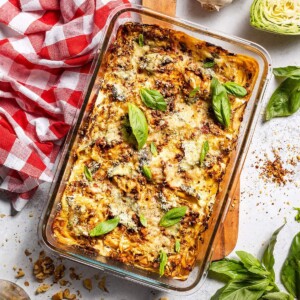
Vegan Cabbage and Walnut Lasagna

This vegan cabbage and walnut lasagna layers tender lemony cabbage with a rich tomato sauce made with toasted walnuts, lentils, capers and fresh basil. Finished with melty vegan mozzarella, Parmesan and crisp breadcrumbs, it’s a hearty oven-baked dinner that serves six.
Ingredients
For the cabbage
- 1 large Savoy cabbage tough core removed and leaves finely shredded
- 1 tablespoon extra virgin olive oil
- Salt and freshly ground black pepper to taste
- Finely grated zest of 1 lemon
For the walnut and lentil tomato sauce
- 1 tablespoon extra virgin olive oil
- 2 garlic cloves minced
- 1 teaspoon chili flakes or less to taste
- 50 g walnuts roughly chopped
- 2 tablespoons capers drained
- 2 x 400 g cans chopped tomatoes
- 1 x 400 g can lentils drained and rinsed
- 1 large handful fresh basil leaves roughly torn
- Salt and freshly ground black pepper to taste
For assembling
- A little olive oil for greasing
- 250 g dried lasagna sheets
- 250 g vegan mozzarella grated
- 50 g vegan Parmesan finely grated
- 2 tablespoons breadcrumbs
- Fresh basil to serve, optional
Instructions
- Preheat the oven to 400°F/200°C, or 180°C fan. Lightly grease a deep 8 x 12-inch/20 x 30-cm baking dish.
- Heat 1 tablespoon of olive oil in a large skillet over medium heat. Add the shredded cabbage, season with salt and black pepper and cook until wilted and tender, stirring regularly.
- Stir through the lemon zest, then transfer the cabbage to a bowl and set aside.
- Return the skillet to medium heat and add the remaining tablespoon of olive oil. Add the garlic and cook briefly until fragrant.
- Stir in the chili flakes and chopped walnuts. Cook, stirring regularly, until the walnuts are fragrant and lightly toasted around the edges. Add the capers and chopped tomatoes. Cover and simmer for 5 minutes.
- Stir the drained lentils and torn basil leaves into the tomato sauce. Season with salt and black pepper, then taste and adjust the seasoning as needed.
- Meanwhile, prepare the lasagna sheets according to the package instructions. If you are using oven-ready sheets, they can be added directly to the lasagna without precooking.
- Spread approximately one-quarter of the tomato sauce across the bottom of the prepared baking dish. Sprinkle over a little of the vegan mozzarella and cover with a layer of lasagna sheets. Arrange one-third of the sautéed cabbage over the pasta.
- Repeat the layers twice more, using tomato sauce, vegan mozzarella, lasagna sheets and cabbage. You should have three cabbage and pasta layers altogether. Finish with the remaining tomato sauce, making sure the uppermost lasagna sheets are completely covered. Top with the remaining vegan mozzarella, followed by the vegan Parmesan and breadcrumbs.
- Bake for 30-40 minutes, or until the sauce is bubbling, the pasta is tender and the topping is golden. Insert a sharp knife into the center to check the pasta - it should pass through without meeting any firm sections. Allow the lasagna to rest for 10 minutes before slicing. Finish with fresh basil, if using, and serve warm.
Notes
- Cabbage: Finely shredding the cabbage helps it cook evenly and makes the finished lasagna easier to slice. Savoy cabbage works particularly well, but white or green cabbage can also be used.
- Lasagna sheets: Check the package instructions, as some dried sheets need to be precooked while others are designed to cook directly in the sauce.
- Keep the pasta covered: Exposed edges can become hard in the oven, so make sure the final pasta layer is completely covered with tomato sauce.
- Chili: One teaspoon gives the sauce a noticeable warmth. Reduce the amount or leave it out for a milder lasagna.
- Walnuts: Chop them into small, uneven pieces rather than grinding them finely. This preserves the hearty texture of the filling.
- Vegan cheese: Melting performance varies between brands. Use a mozzarella-style alternative that you already know melts well.
- Baking dish: A deep 8 x 12-inch/20 x 30-cm dish works best. A larger dish may produce thinner layers and require additional lasagna sheets.
- Browning: If the top becomes dark before the pasta is tender, loosely cover the dish with foil for the remaining baking time.
- Make ahead: Assemble the lasagna up to 24 hours in advance, cover and refrigerate. Add approximately 5-10 minutes to the baking time when cooking it directly from the fridge.
- Storage: Refrigerate cooked leftovers in an airtight container for up to three days, or freeze individual portions for up to three months.