


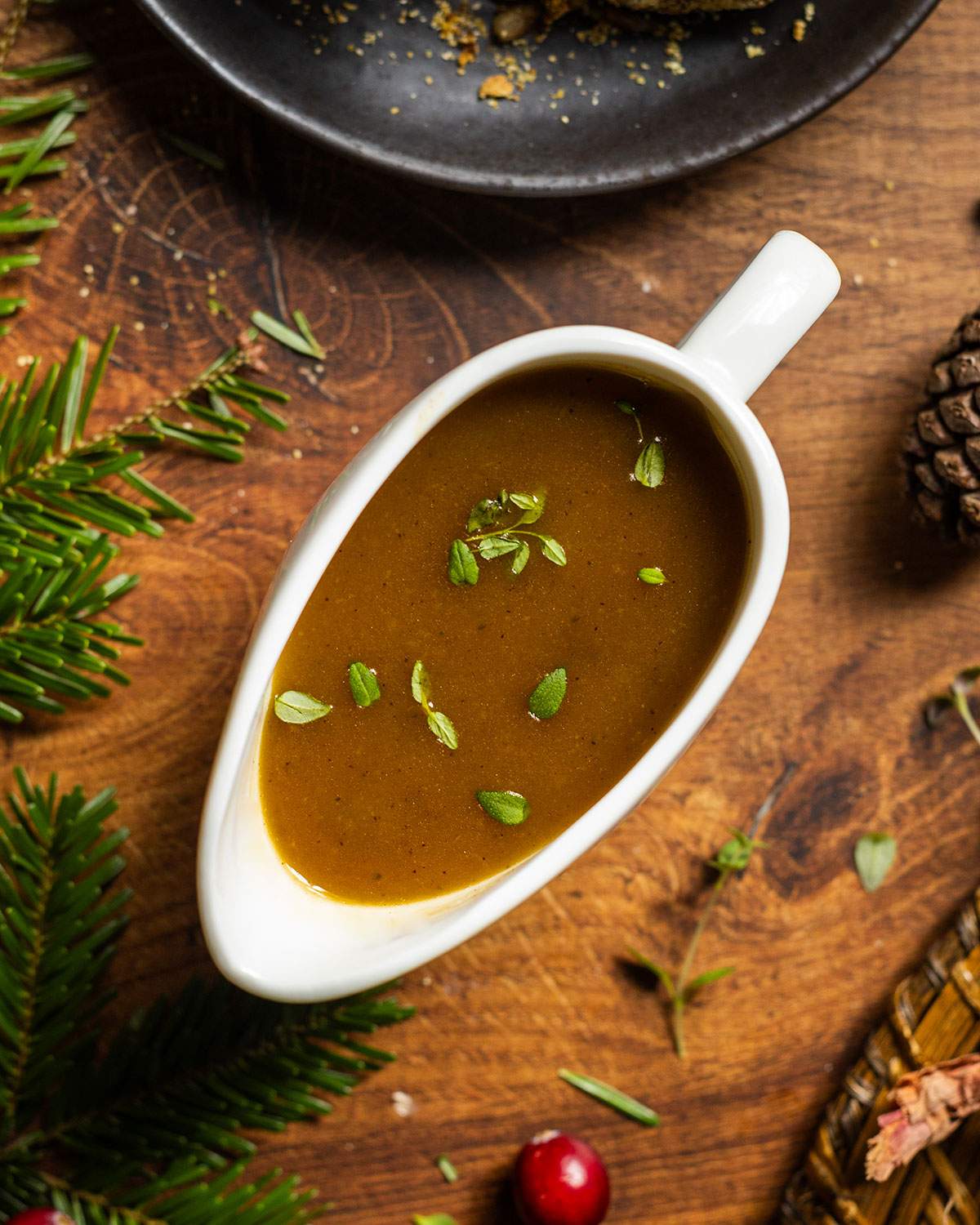
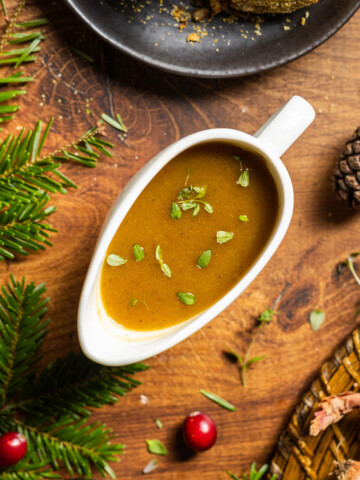
This Shallot & Balsamic Gravy is rich, savory, and just a little sweet, with deeply caramelized shallots and a tangy balsamic finish. It’s especially good poured over mashed potatoes, roasted vegetables, stuffing, or your favorite vegan roast.
The gravy starts with a simple homemade vegetable stock made from scraps you might otherwise throw away. Keep a bag in the freezer and add things like carrot peelings, onion ends, celery leaves, and herb stems as you cook - then when it’s full, you’ve already got the base for your next batch of gravy.
📌 If you love Pinterest you can pin any of the images to your boards!
Jump to:
🌱 Ingredients & Notes
- Vegetable scraps - Carrot peelings, onion or shallot ends, celery leaves, leek trimmings, and herb stems all work well for the stock.
- Shallots - Finely chopped and cooked until soft, they add a naturally sweet, mellow onion flavor.
- All-purpose flour - Thickens the gravy and gives it a smooth consistency.
- Balsamic vinegar - Reduced before being added to concentrate its sweet, tangy flavor.
- Soy sauce or tamari - Adds savory depth and helps deepen the color of the gravy.
- Agave nectar - Just enough to round out the acidity of the balsamic.
Scroll to the recipe card at the bottom of the post for detailed quantities and measurements.
🥕 Which Vegetable Scraps Work Best for Stock?
A good scrap stock is all about balance. Carrot, onion, shallot, leek, celery, mushroom stems, and fresh herb stalks are all great additions and create a savory base without overpowering the gravy.
I’d avoid using too many strongly flavored or bitter scraps, particularly Brussels sprouts, broccoli, cabbage, kale stems, or other cruciferous vegetables, as they can make the stock taste bitter or sulfurous after simmering.
You can keep a reusable bag or container in the freezer and add suitable scraps whenever you cook. There’s no need to thaw them before making the stock - simply tip them straight into the pot and cover with water.
🍇 Getting the Balsamic Reduction Right
Reducing the balsamic separately concentrates its flavor before it goes into the gravy. Keep it at a gentle simmer rather than a rapid boil and watch it closely toward the end - once it begins to look slightly syrupy, remove it from the heat.
It doesn’t need to become as thick as a balsamic glaze. The reduction will thicken further as it cools and again once it’s whisked into the gravy.
🍽️ Serving Ideas
This gravy is made for roast dinners and holiday meals. Pour it over mashed or roasted potatoes, stuffing, roasted vegetables, or a vegan roast.
The balsamic and shallots also pair especially well with earthy ingredients such as mushrooms, lentils, chestnuts, and root vegetables.
🧊 Storage & Reheating
Store cooled gravy in an airtight container in the refrigerator for up to 4 days. Reheat gently in a saucepan, whisking in a splash of water or vegetable stock if it has thickened too much.
The gravy can also be frozen for up to 2 months. Thaw overnight in the refrigerator and whisk well while reheating to bring the consistency back together.
Did you make this recipe? If so, will you do me a huge favor and leave a review and star rating & let me know how you liked this recipe? THANK YOU! ❤️
🔜 More Vegan Roast Dinner Recipes


Serve this shallot and balsamic gravy with my Vegan Yorkshire Puddings and Vegan Turkey Roast for the ultimate festive holiday roast dinner.
Here's a handy recipe card that you can print out and keep in your kitchen for easy reference:
📖 Recipe Card
Shallot & Balsamic Gravy

Equipment
- Large saucepan or stockpot
- medium saucepan
- small saucepan
- Fine mesh strainer
- whisk
- wooden spoon
Ingredients
- 2 handfuls vegetable scraps such as carrot peelings, onion ends, celery leaves, leek trimmings, and herb stems
- 4-8 cups water about 1-2 liters, or enough to cover the scraps
- 1 whole bay leaf
- 3-4 whole black peppercorns
- 2 tablespoons olive oil 30 ml
- 2 whole shallots finely chopped
- 2 whole garlic cloves minced
- 2½ tablespoons all-purpose flour 20g, UK: plain flour
- 2 cups vegetable stock 480 ml, strained
- ¼ cup balsamic vinegar 60 ml
- 1 tablespoon soy sauce 15 ml, or tamari
- 1 teaspoon agave nectar or maple syrup
- salt and black pepper to taste
Instructions
- Make the vegetable stock: Add the vegetable scraps, water, bay leaf, and peppercorns to a large saucepan. Bring to a gentle simmer and cook for 45-60 minutes. Strain through a fine-mesh strainer and set aside.
- Reduce the balsamic: Add the balsamic vinegar to a small saucepan and bring to a gentle simmer. Cook until slightly reduced and syrupy, watching closely so it doesn’t burn. Remove from the heat.
- Cook the shallots: Heat the olive oil in a medium saucepan over medium heat. Add the shallots and cook until soft and translucent. Add the garlic and cook for another 30-60 seconds, until fragrant.
- Make the roux: Sprinkle in the flour and stir continuously for 1-2 minutes, until no dry flour remains.
- Add the stock: Gradually pour in the vegetable stock while whisking continuously to keep the gravy smooth.
- Finish the gravy: Stir in the balsamic reduction, soy sauce, and agave. Simmer gently for 10-15 minutes, stirring occasionally, until the gravy has thickened to your preferred consistency.
- Season and serve: Taste and season with salt and black pepper as needed. Serve warm.
Notes
- Vegetable scraps: Stick mostly to mild, savory vegetables such as carrots, onions, shallots, leeks, celery, mushrooms, and herbs. Avoid using large amounts of cruciferous vegetables, as they can make the stock bitter.
- Stock quantity: You only need 2 cups + 2 tablespoons (500 ml) of finished stock for the gravy. Freeze any extra for another recipe.
- Balsamic reduction: Don’t reduce the vinegar all the way to a thick glaze. It should still be pourable when it comes off the heat.
- Consistency: The gravy will continue to thicken slightly as it cools. If it becomes too thick, simply whisk in a splash of vegetable stock or water.
- Make ahead: Both the vegetable stock and finished gravy can be prepared ahead of time and refrigerated until needed.
© 2026 Romy London / Romina Callwitz | All images, videos, wordings and content are copyright protected and belong to Romina Callwitz. Please do not use any of my content without prior permission. If you wish to re-publish any (part of my) content, please get in touch via email. Thanks for your support!
*Disclosure: This page may contain affiliate links and sponsored links that earn me a small commission, at no additional cost to you. You can find more information in my Privacy Policy.



💭 Leave a Comment