


Wondering how to tell if garlic is bad? Check the cloves for mold, soft or slimy spots, large brown or black areas, and an unpleasant sour or musty smell - these are the clearest signs that garlic should be tossed.
Not every change means your garlic has spoiled, though. Green sprouts, slight yellowing, or some dryness usually mean the garlic is getting older rather than automatically unsafe to use.
In this guide, I’ll show you what fresh, aging, and spoiled garlic look like, including real photo examples, so you can quickly decide whether the garlic in your kitchen is still good.
Jump to:
- 🧄 Does garlic go bad
- 👀 What Does Bad Garlic Look Like?
- 🚫 4 Sure Signs Garlic Has Gone Bad
- 🌱 Signs Garlic Is Old But May Still Be Good
- 🌱 Can You Eat Sprouted Garlic?
- 🫙 What About Minced Garlic, Garlic Paste and Garlic Powder?
- ⏳ How Long Does Garlic Last?
- 📦 How to Store Garlic
- 💜 Is Purple Garlic Bad?
- ❓ Frequently Asked Questions
- 🔜 Garlic Recipes
- Related Blog Posts
🧄 Does garlic go bad
Yes, garlic does go bad. Fresh garlic gradually loses moisture as it sits, becoming softer, lighter, and more shriveled over time. Eventually, it can also develop mold or rot.
The important thing is that old garlic and spoiled garlic aren’t always the same thing. A clove that has started sprouting or looks slightly dry may still be perfectly usable, while a soft, slimy, moldy, or rotten clove should be tossed.
High-quality fresh garlic should feel firm, with dry, papery skin. As garlic deteriorates, the cloves can become soft or spongy, and storage molds can cause green, gray, or white fungal growth and decay.
Quick rule: If your garlic is still firm, dry, and free from mold or rotten areas, it is usually a quality issue rather than an obvious spoilage issue.
👀 What Does Bad Garlic Look Like?
Bad garlic can look different depending on how far it has deteriorated, but the most obvious warning signs are fuzzy mold, soft or collapsing cloves, wet or slimy decay, and large areas of brown or black rot.
Some changes are much less concerning. A green sprout, slightly dry clove, or naturally purple skin does not automatically mean the garlic has gone bad.
This is why I find it more useful to divide garlic into three categories: good to use, getting old, and ready to toss.
Is My Garlic Still Good? Quick Check
| What your garlic looks or feels like | What I’d do |
|---|---|
| Firm, plump clove with dry skin | ✅ Use it |
| Firm clove with a green sprout | ✅ Usually fine to use |
| Slightly dry or shriveled | 🟡 Getting old - check the rest of the clove |
| Slight cream/yellow color but still firm and dry | 🟡 Inspect carefully |
| Very soft or spongy | ❌ Toss it |
| Wet or slimy | ❌ Toss it |
| Fuzzy blue-green, gray, or white mold | ❌ Toss it |
| Large brown or black rotten areas | ❌ Toss it |
| Sour, musty, or clearly unpleasant smell | ❌ Toss it |
UC Davis describes good-quality garlic as firm and well cured, while common garlic storage rots can leave cloves soft, spongy, powdery, or covered in green or gray fungal growth.
🚫 4 Sure Signs Garlic Has Gone Bad
If you’re unsure about a bulb or clove, check these four things before using it.
1. Mold or fuzzy growth
Visible fuzzy growth is one of the clearest reasons to discard garlic.
Garlic can develop several types of fungal decay. Blue-green fuzzy growth is associated with Penicillium decay, while other garlic diseases can produce white fluffy or fuzzy growth around the bulb or base.
Because garlic cloves are small and often tightly packed together inside a bulb, I wouldn’t try to rescue visibly moldy cloves by simply scraping or cutting away the fuzzy area. Discard the affected clove, and inspect neighboring cloves carefully for soft spots or mold before using them.
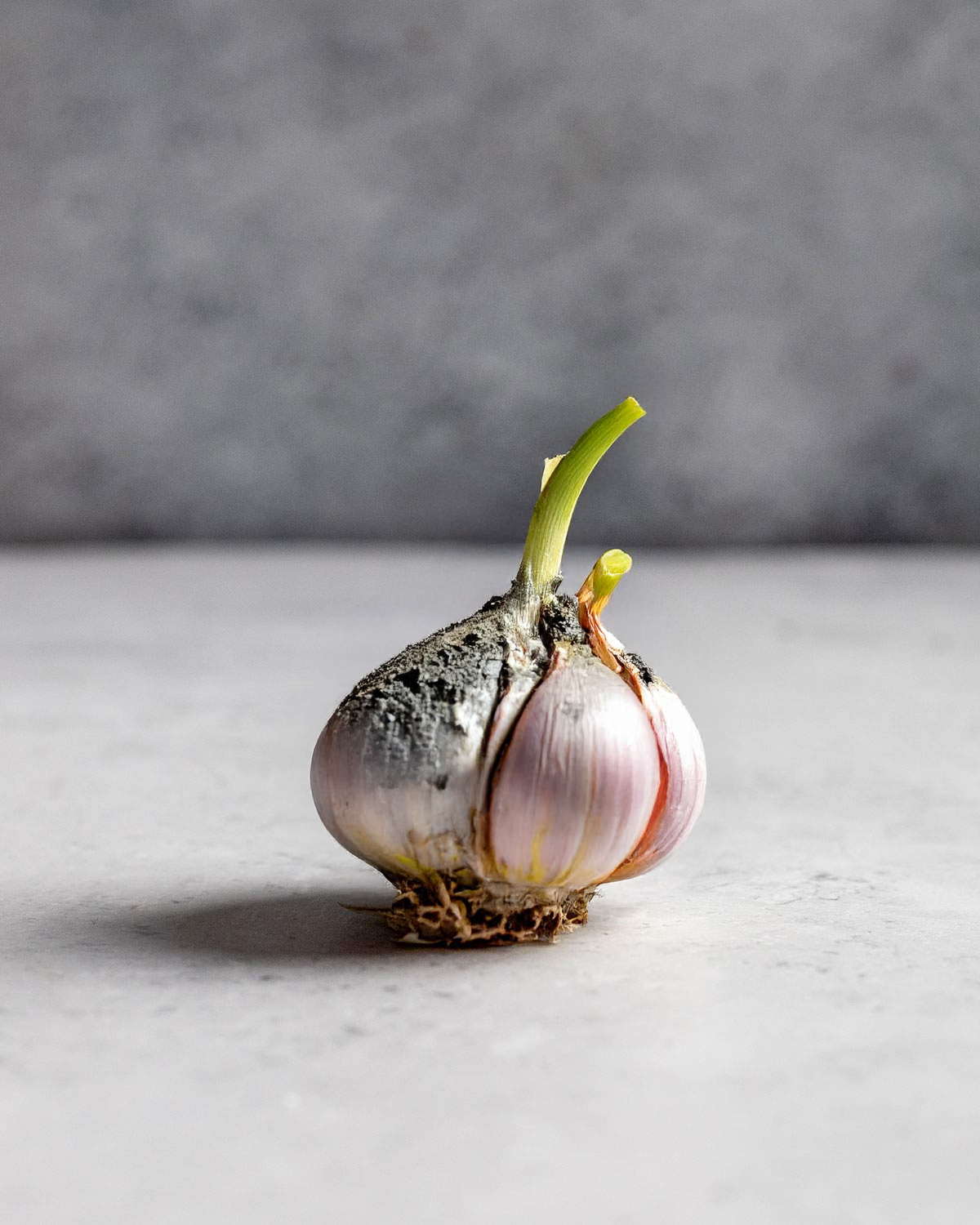
Fuzzy mold is a clear sign that this garlic should be discarded.
2. Soft, mushy, or slimy cloves
Fresh garlic should feel firm when you press it.
If a clove feels very soft, spongy, wet, mushy, or slimy, it has deteriorated and should be discarded. UC Davis notes that garlic affected by storage decay can become soft and spongy even before there is much visible evidence on the outside of the bulb.
Don't confuse this with a slightly dry clove. Older garlic may lose moisture and become shriveled without being wet or rotten.
3. Large brown or black rotten patches
Small marks on the papery skin aren't necessarily a problem, so peel the clove and check the actual flesh underneath.
Discard garlic when the clove has large dark areas combined with softening, wet decay, or breakdown of the flesh.
Damaged garlic is more prone to discoloration and decay during storage, and several types of garlic rot can cause brown, watery, or deteriorating areas within the bulb.
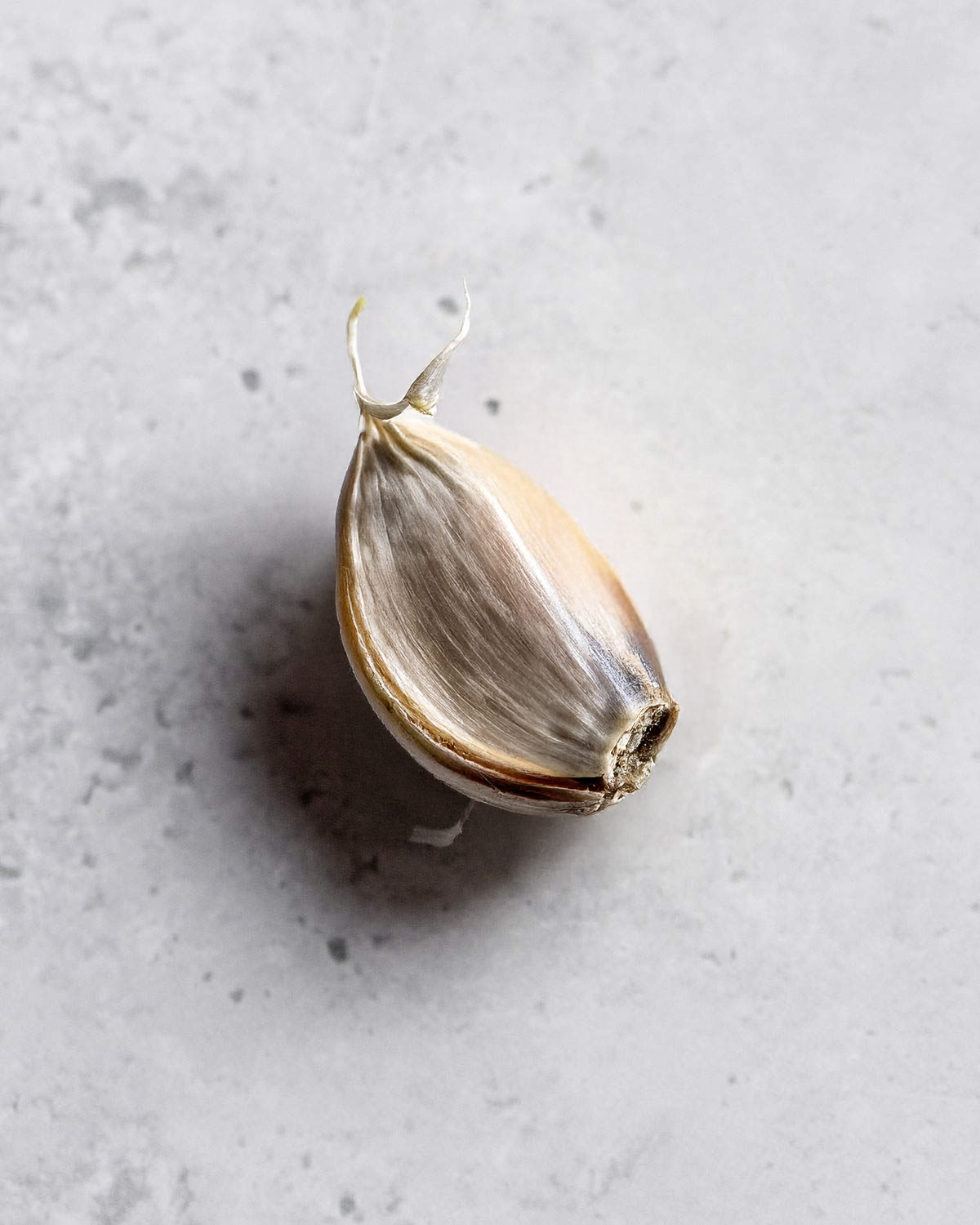
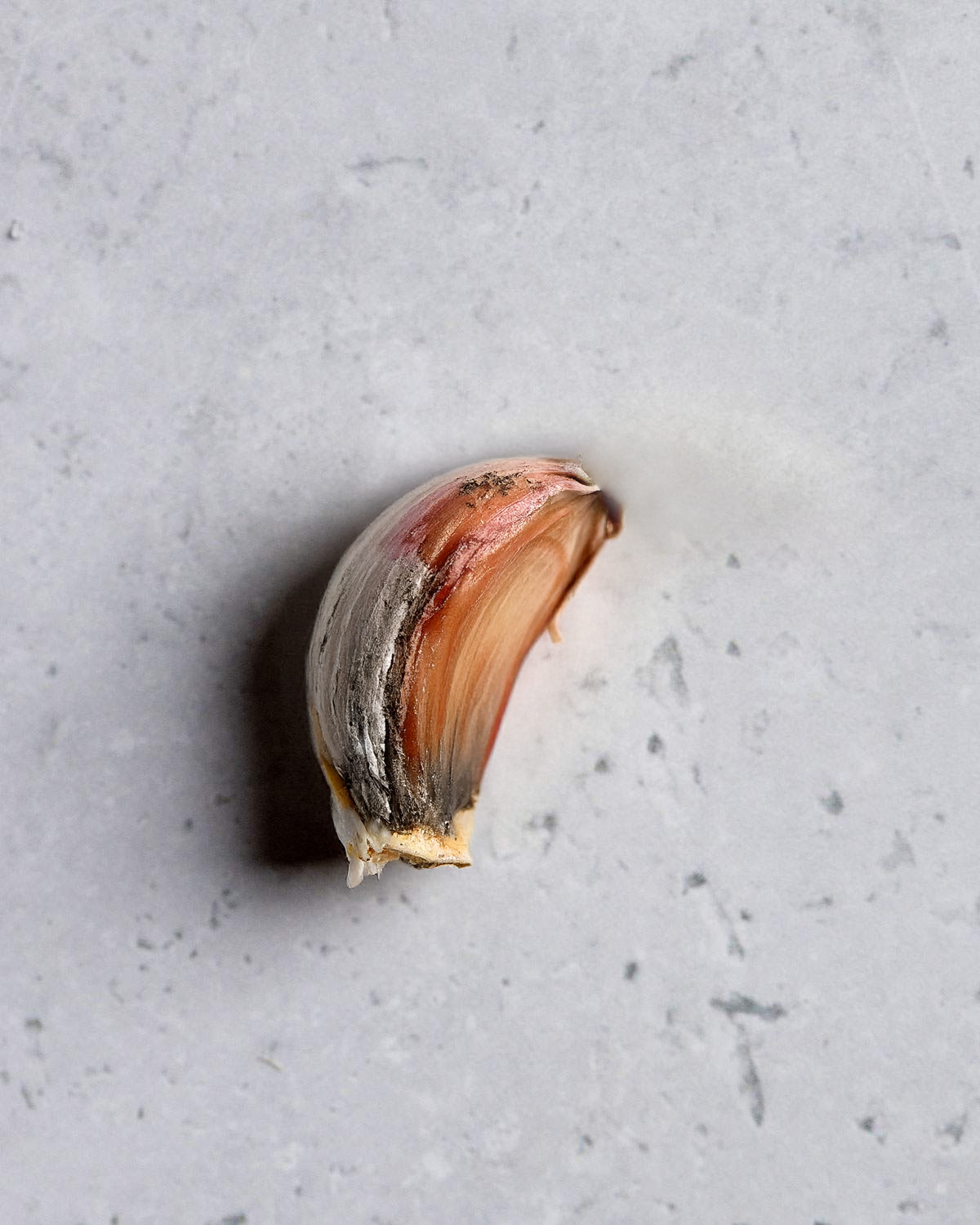
Dark areas accompanied by soft or deteriorating flesh are a sign of rot.
4. Sour, musty, or unusual smell
Cut or crush the clove if you're unsure.
Freshly cut garlic should develop its familiar strong, pungent aroma. Garlic's characteristic smell becomes much more noticeable once the cloves are damaged or crushed because that triggers the reactions that produce its sulfur compounds.
If the garlic instead smells distinctly sour, musty, fermented, or otherwise unpleasant, I would discard it.
One important point: an intact bulb doesn't necessarily smell strongly of garlic, so a weak smell alone isn't enough to decide that a whole bulb has gone bad.
🌱 Signs Garlic Is Old But May Still Be Good
Some of the things that make garlic look slightly questionable are actually signs of age rather than spoilage.
Before throwing it away, look at the whole picture: is the clove still firm and dry? Is it free from mold, slime, and rotten areas? Does it smell normal once cut?
If so, it may simply be past its peak quality.
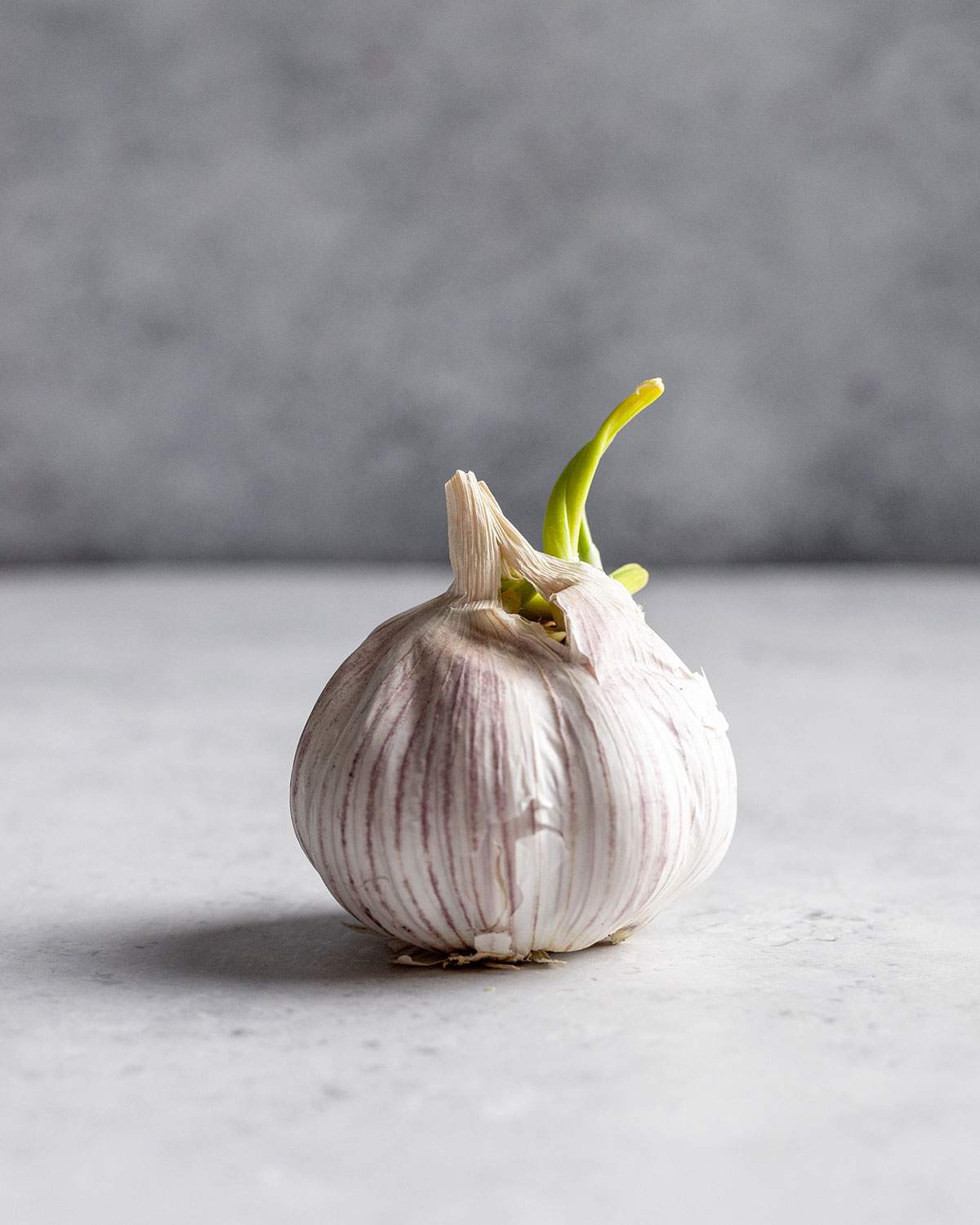
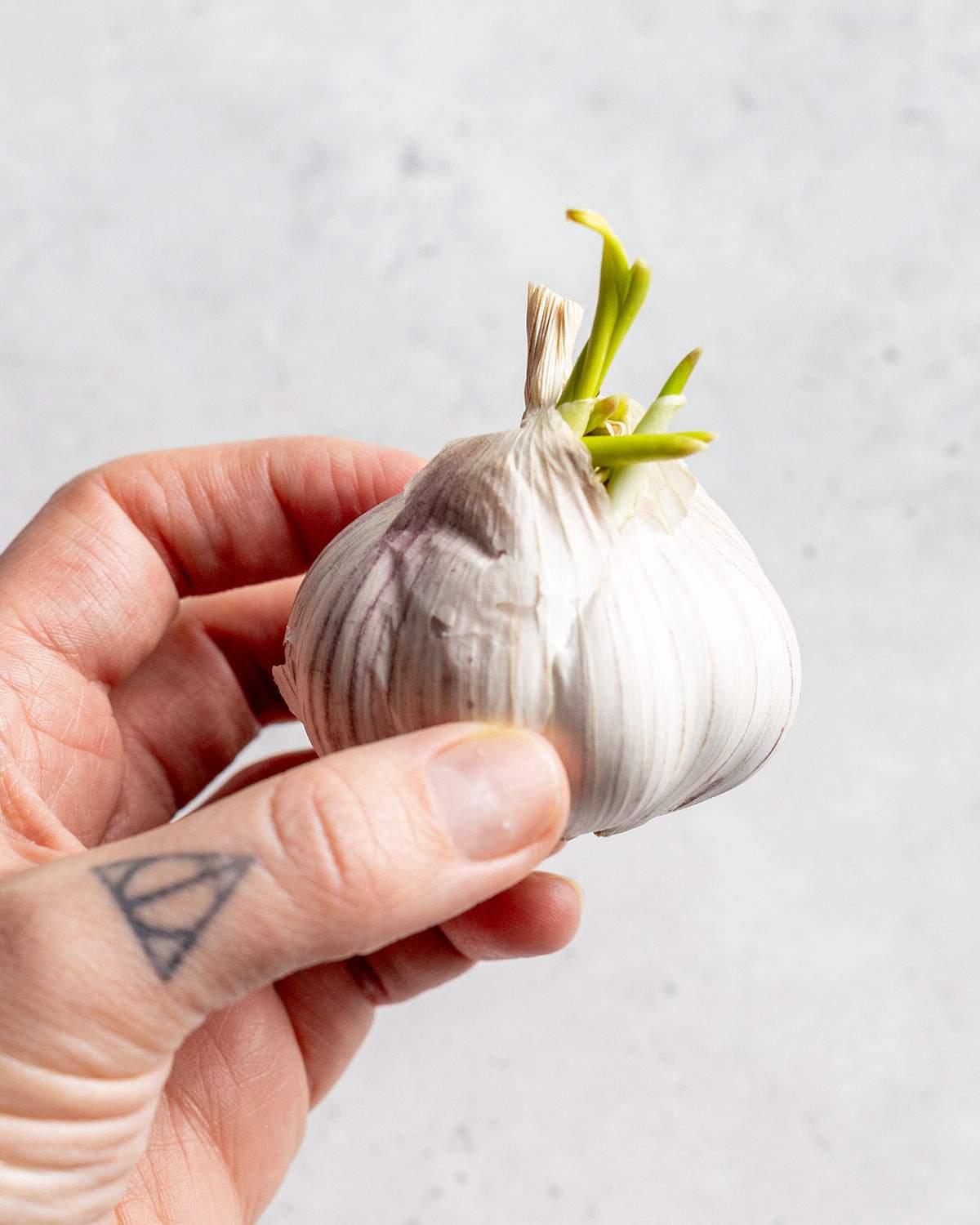
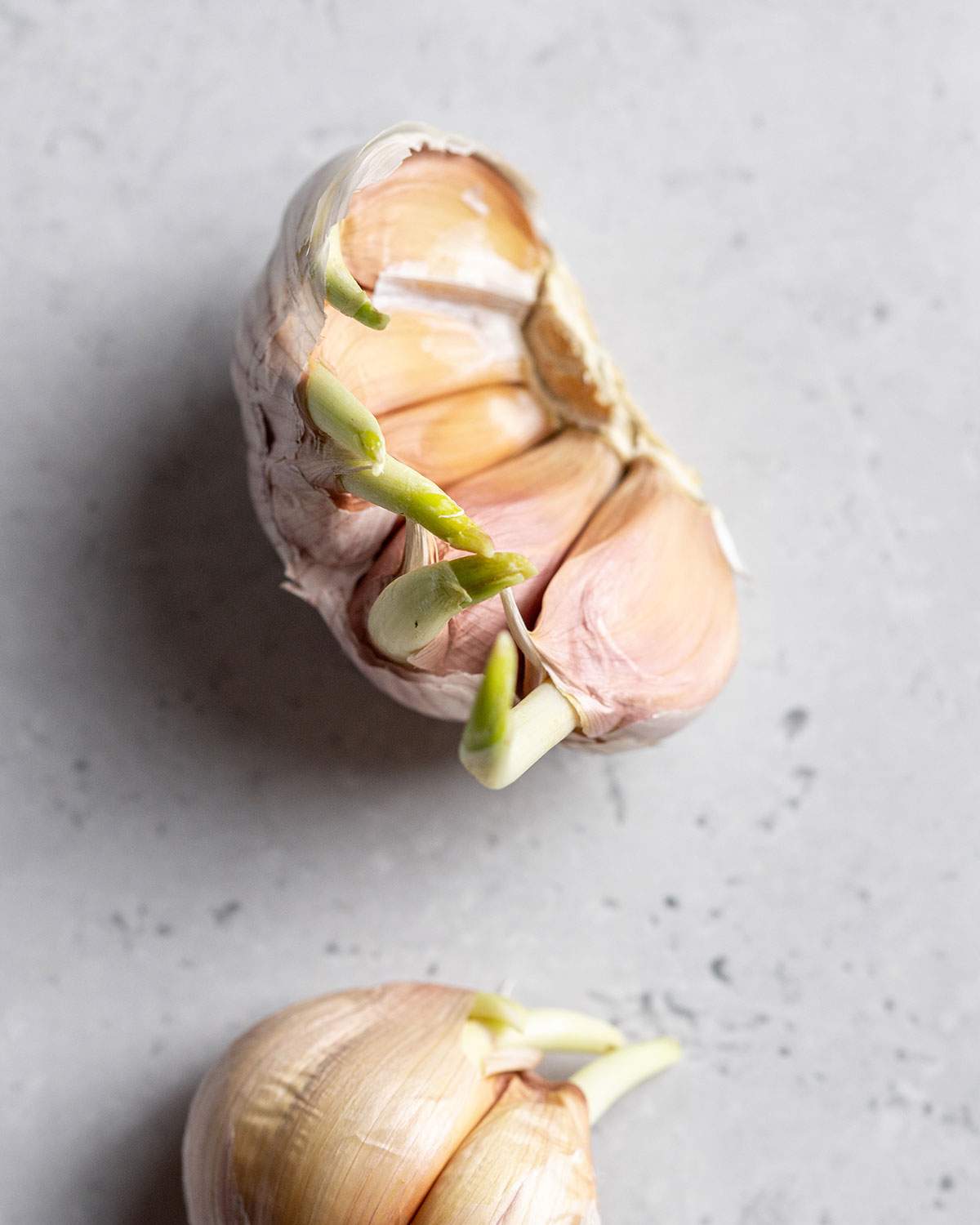
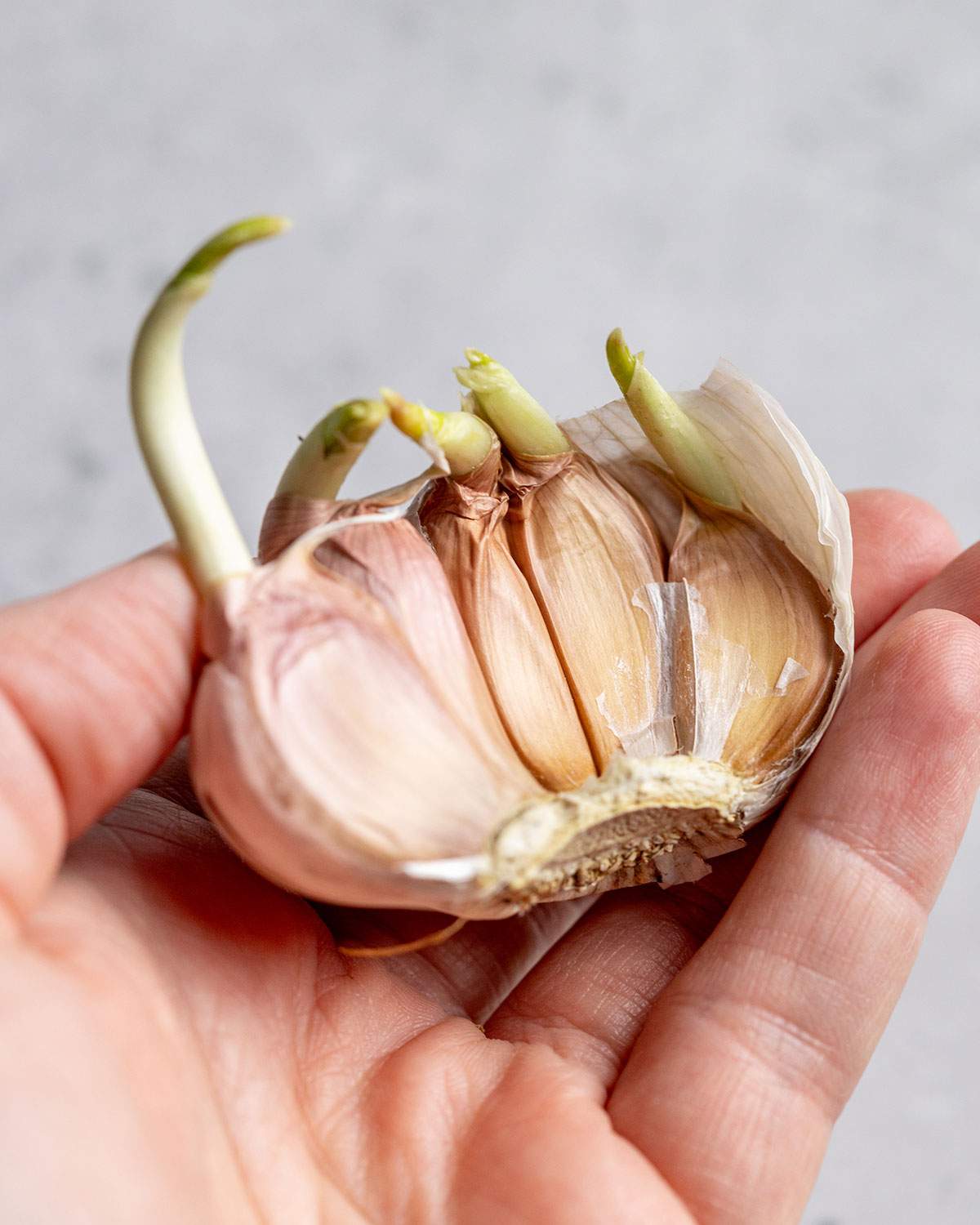
Sprouted garlic
A green shoot growing from the center means the garlic has broken dormancy and started growing again.
Sprouting happens naturally as garlic ages and is particularly encouraged by certain storage temperatures. It does not, by itself, mean the clove is rotten.
If the surrounding clove is still firm and looks healthy, I would use it.
The green shoot can taste stronger or more bitter than the rest of the clove, so you can slice the garlic lengthwise and pull out the sprout before cooking if you prefer.
Yellowing garlic
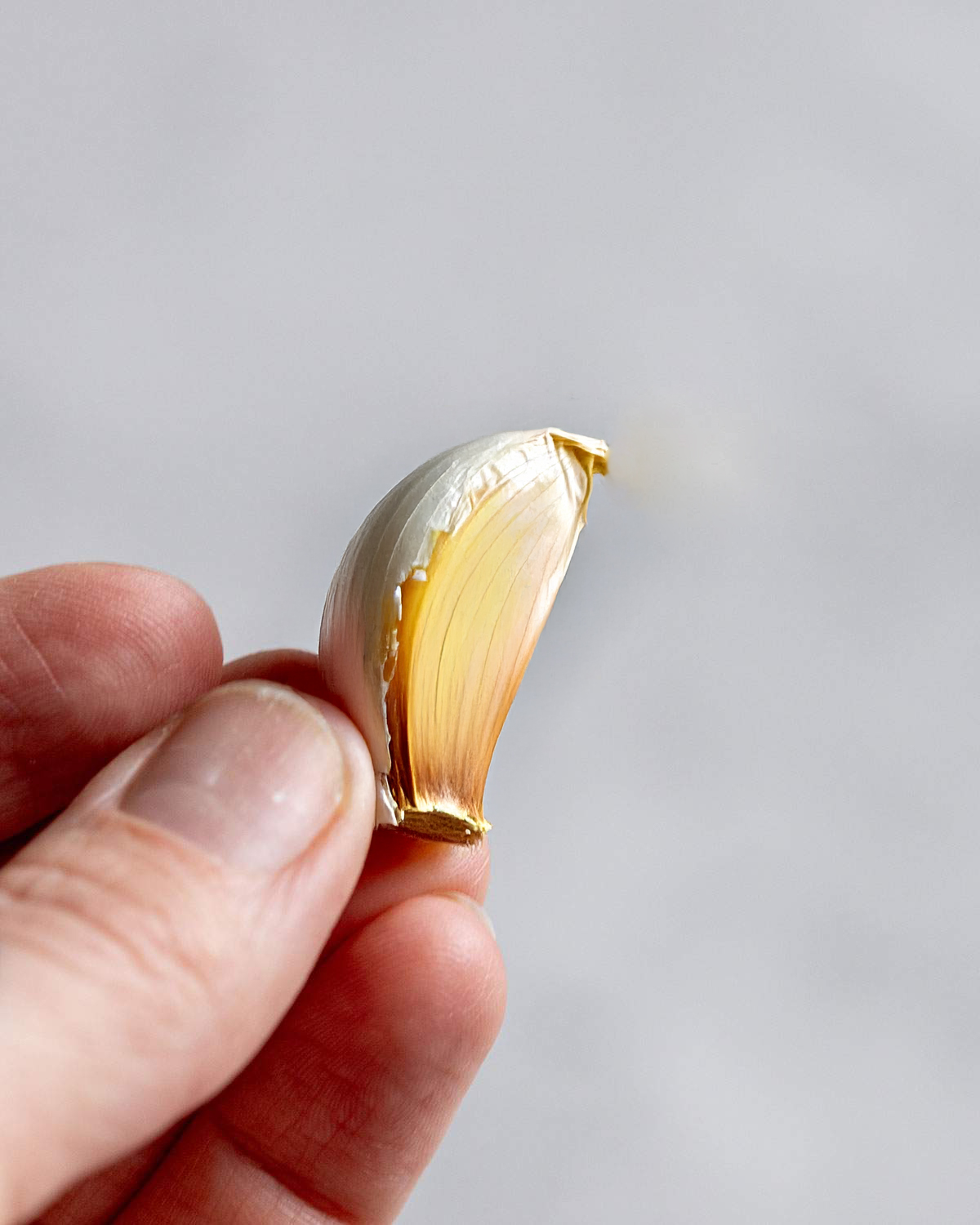
This one needs a little more nuance than simply saying yellow = old.
A slight cream or pale-yellow tone in an otherwise firm, dry clove doesn't automatically mean it is spoiled. However, translucent yellow or amber flesh that becomes sticky or waxy can indicate a physiological condition known as waxy breakdown. UC Davis describes this as beginning with small pale-yellow areas that darken to amber before the clove becomes translucent and sticky.
So I’d judge yellow garlic by its texture as well as its color:
- Firm + dry + slightly yellow: inspect it and use your judgment.
- Translucent + sticky/waxy or deteriorating: discard it.
That distinction is much more useful than treating every yellow clove as spoiled.
Dry or shriveled garlic
Garlic naturally loses moisture during storage. Older cloves can become lighter, wrinkled, or slightly shriveled, especially when stored at room temperature for a long time. UC Davis notes that bulbs eventually become soft, spongy, and shriveled through water loss under ambient storage conditions.
A slightly shriveled but otherwise firm, mold-free clove may still be usable, although its flavor and texture won't be at their best.
If the clove has become extremely hollow, spongy, powdery, or shows signs of decay, I would toss it instead.
🌱 Can You Eat Sprouted Garlic?
Yes - sprouting alone doesn't mean a garlic clove has gone bad.
The green shoot simply shows that the clove has begun growing. Garlic naturally loses its dormant state during storage, and sprout development happens faster at certain temperatures.
Before using sprouted garlic, check the clove itself.
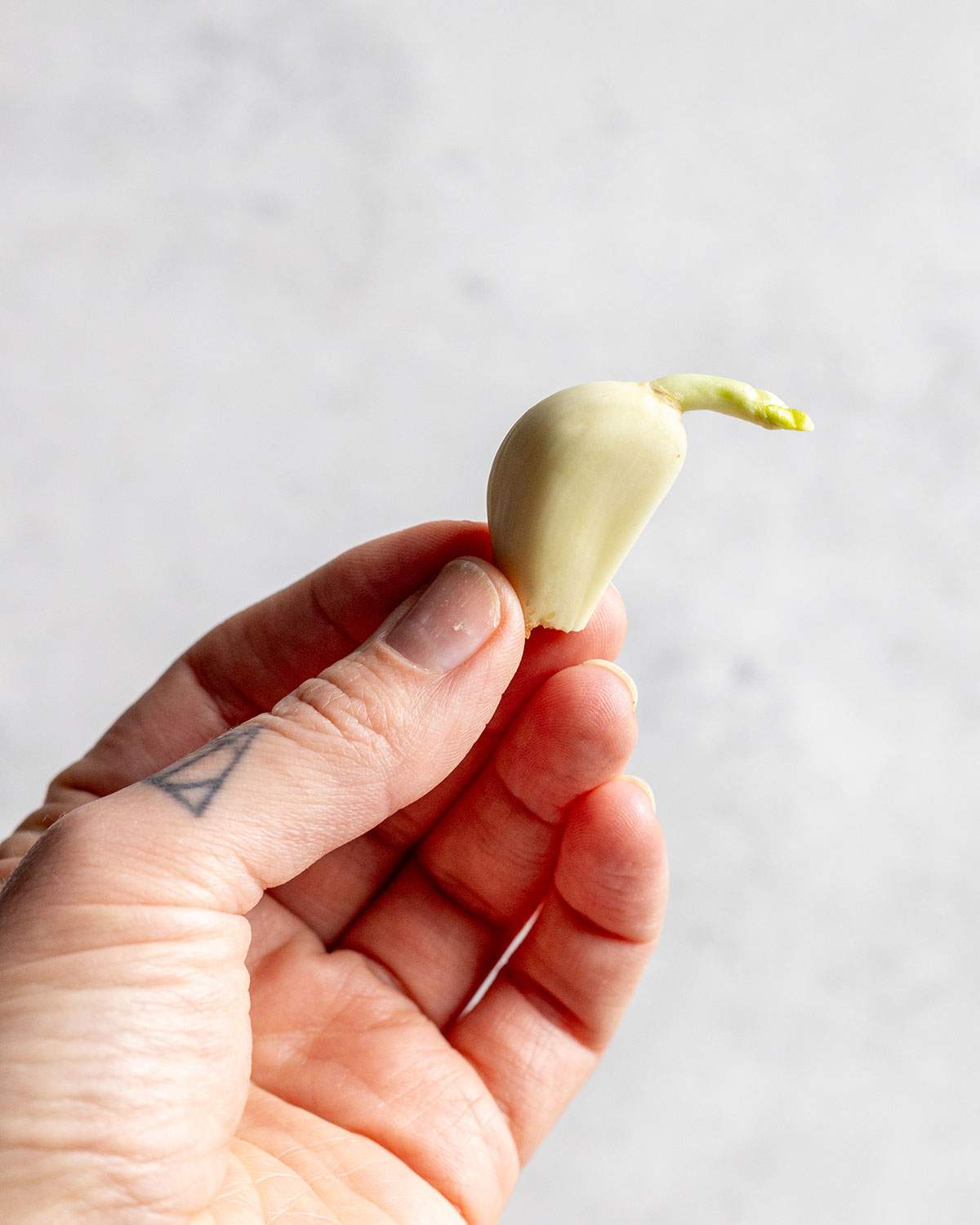
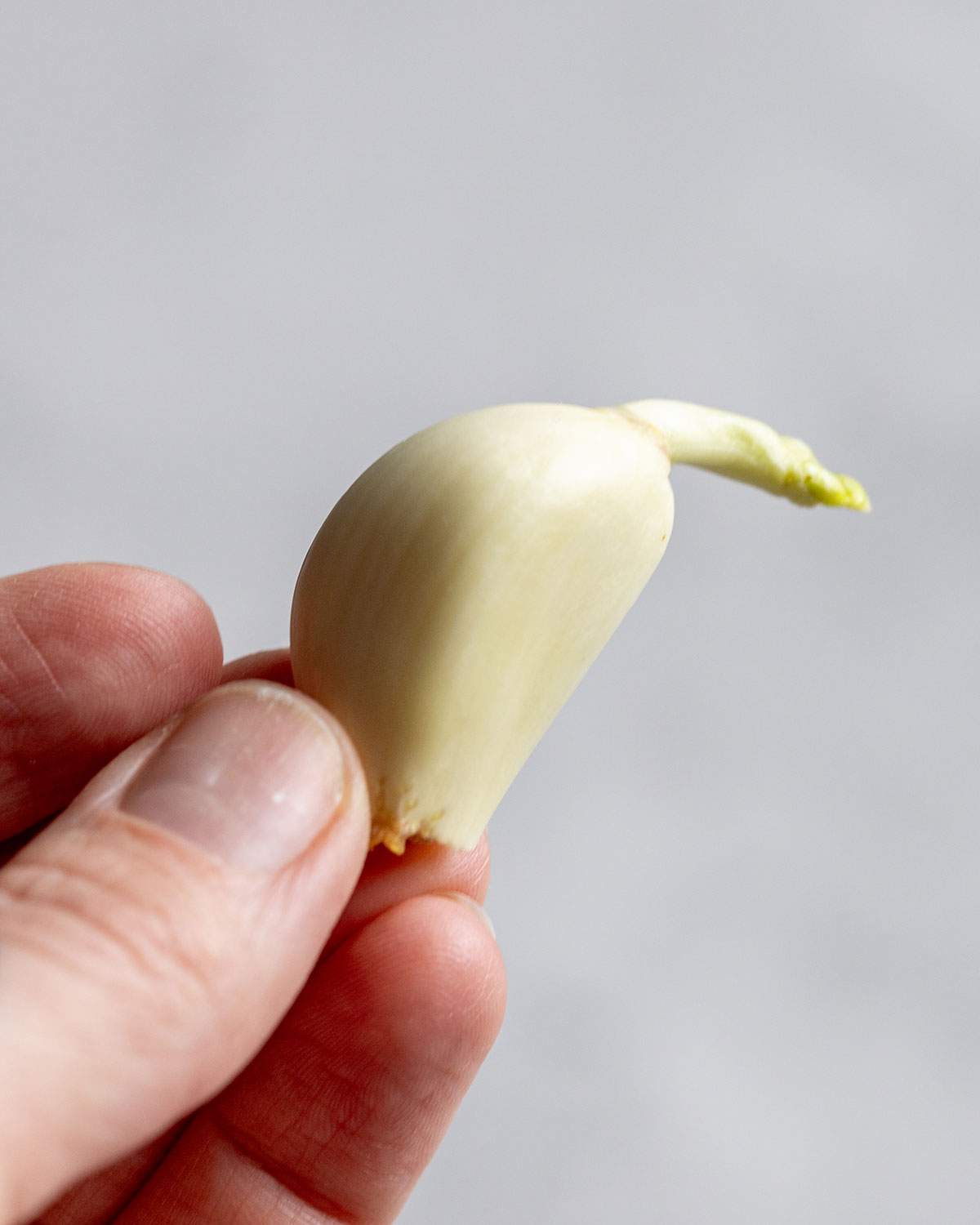
If it is:
- firm,
- dry,
- free from mold,
- not slimy or rotten,
you can still use it.
I usually cut the clove lengthwise and remove the green shoot when it has become large, as the sprout can have a more assertive flavor.
However, don't let the presence of a sprout distract you from other spoilage signs. A sprouted clove that is also soft, moldy, slimy, or rotten should still be discarded.
🫙 What About Minced Garlic, Garlic Paste and Garlic Powder?
The signs and storage rules are a little different once garlic has been processed.
Jarred minced garlic and garlic paste
For commercially prepared minced garlic or garlic paste, follow the storage instructions and use-by guidance on the package. Formulations vary: some products contain acids, preservatives, oil, or other ingredients that affect how they should be stored.
Once opened, keep refrigerated if the label requires it and always use a clean utensil.
Discard the product if you notice mold, an unusual odor, unexpected fermentation or bubbling, or a major change in appearance or texture.
Freshly minced garlic
If you've chopped or minced fresh garlic yourself, keep it covered in the refrigerator and use it promptly rather than leaving it at room temperature.
For longer storage, chopped garlic can also be tightly wrapped and frozen. Oregon State University Extension recommends freezing chopped garlic as one option for preserving it.
Garlic stored in oil
This needs its own safety warning.
Do not store homemade raw garlic in oil at room temperature. Garlic is a low-acid food, and the low-oxygen environment created by oil can allow Clostridium botulinum to grow and produce botulinum toxin.
Homemade garlic-in-oil should be kept at 40°F (4°C) or below for no more than 4 days, or frozen for longer storage.
Garlic powder
Garlic powder is very different from fresh garlic because most of its moisture has been removed.
Keep it in a tightly closed container in a cool, dark, dry place. Moisture is the main thing you want to keep out. Oregon State recommends storing homemade dried garlic powder in a closed container away from light and moisture.
For commercially packaged garlic powder, follow the manufacturer's best-before date. Older garlic powder is more likely to lose aroma and potency than suddenly become unsafe, but discard it if moisture has entered the container or you see mold or other obvious deterioration.
⚠️ What Happens If You Eat Bad Garlic?
If garlic is visibly moldy, rotten, slimy, or smells clearly off, the safest option is simply not to taste it to find out.
Spoilage signs can tell you when food has deteriorated, but they cannot prove that a food is free from harmful microorganisms. USDA guidance points out that disease-causing bacteria do not necessarily change the smell, taste, or appearance of food.
I'd therefore keep this section deliberately simple rather than suggesting that one particular bacterium causes ordinary garlic spoilage.
What about botulism?
Botulism is a specific concern with improperly stored garlic in oil, rather than something you should imply is commonly caused by an old bulb sitting in the cupboard.
Garlic is low in acid, and submerging it in oil creates the low-oxygen conditions in which Clostridium botulinum can become dangerous if storage conditions are wrong.
Never keep homemade raw garlic-in-oil at room temperature. Refrigerate it at 40°F (4°C) or below and use it within 4 days, or freeze it.
I think this version is considerably safer and more accurate than connecting ordinary spoiled garlic directly with botulism.
⏳ How Long Does Garlic Last?
Garlic shelf life varies quite a lot depending on the variety, temperature, humidity, airflow, and whether the bulb has been broken apart.
I wouldn't give readers one magic expiration date.
Instead:
| Type of garlic | How to store it | Rough guide |
|---|---|---|
| Whole, cured bulb | Cool, dry, dark place with airflow | Often 1-2 months at ordinary room temperatures, potentially much longer under ideal storage conditions |
| Separated unpeeled cloves | Cool, dry place | Usually around a couple of weeks |
| Peeled fresh cloves | Covered in the refrigerator | Use relatively quickly and judge by condition |
| Fresh chopped/minced garlic | Covered in the refrigerator | Use promptly; freeze for longer storage |
| Homemade garlic in oil | Refrigerator at ≤40°F / 4°C | Maximum 4 days |
| Frozen garlic | Freezer | Suitable for longer-term storage |
| Garlic powder | Airtight container, cool and dry | Follow the package date; quality gradually declines |
Treat these times as quality guides rather than countdown timers. Always inspect the garlic itself before using it.
UC Davis reports that cured garlic can remain in good condition for roughly 1-2 months at ambient temperatures, while carefully controlled cold, dry commercial conditions can extend storage beyond nine months. Variety also matters: Oregon State notes that properly stored softneck garlic can last longer than hardneck varieties.
📦 How to Store Garlic
For everyday home storage, keep whole garlic bulbs somewhere cool, dark, dry, and well ventilated.
A mesh bag, open basket, or other breathable container works better than sealing whole bulbs inside an airtight plastic bag. Good airflow helps prevent moisture from accumulating, while high humidity encourages mold and rooting.
For whole bulbs
- Keep them dry.
- Protect them from direct sunlight.
- Allow air to circulate around them.
- Avoid sealed plastic containers that trap moisture.
- Keep bulbs intact until you need the individual cloves.
Should you refrigerate whole garlic?
For most everyday household storage, I wouldn't recommend moving intact cured bulbs in and out of the refrigerator.
Garlic sprouts particularly quickly at intermediate cool temperatures, and extension guidance generally recommends a cool, dry, well-ventilated storage area for whole bulbs rather than a humid home refrigerator.
Once garlic has been peeled or chopped, however, refrigeration becomes the practical short-term option.
Can you freeze garlic?
Yes. You can freeze:
- Whole unpeeled cloves
- Peeled cloves
- Chopped or minced garlic
Wrap it tightly before freezing, because garlic's aroma can transfer to other foods.
A warning about garlic in oil
If you want to freeze garlic blended with oil, freeze it immediately rather than storing it at room temperature. Homemade garlic-in-oil kept refrigerated must be used within four days.
💜 Is Purple Garlic Bad?
No - purple garlic isn't automatically bad at all.
Some garlic varieties naturally have purple, pink, or reddish coloring in the papery wrappers around the cloves. University of Minnesota Extension describes healthy garlic cloves as having white, purplish, or pinkish papery sheaths, and varieties such as Spanish Roja, German Red, and other purple-striped types naturally develop plenty of color.
So if the skin is purple but the clove underneath is firm, dry, and healthy-looking, there is nothing inherently wrong with it.
What matters is where the discoloration is and what else is happening.
Normal: Purple or pink coloring on the dry outer skin
Check carefully: Unusual purple/red discoloration developing within damaged or deteriorating tissue
Toss: Purple/dark discoloration accompanied by watery decay, softness, mold, or an off smell
Some garlic diseases can produce red-to-purple discoloration alongside decay, so color should always be considered together with the clove's texture and condition, rather than used as the only test.

Hi, I'm Romy 👋
I'm a recipe developer & food photographer. I test recipes and use ingredients like garlic almost every day. I share what actually works (and what doesn't).
❓ Frequently Asked Questions
I wouldn’t recommend trying to rescue a moldy garlic clove by simply trimming off the visible fuzzy area. Mold can extend beneath the surface, and garlic cloves are small enough that cutting a generous margin around the mold often leaves very little worth saving. USDA guidance allows small mold spots to be removed from some firm, low-moisture vegetables by cutting at least 1 inch around and below the affected area, but for an individual garlic clove I’d take the more cautious approach and discard the moldy clove. Check neighboring cloves carefully too.
Not necessarily. A slightly cream or yellow clove that is still firm, dry, and free from mold or rot may simply be getting older.
However, garlic with yellow or amber, translucent, sticky, or waxy flesh can be affected by waxy breakdown and should be discarded. So use the color together with the texture and overall condition rather than judging it by yellowing alone.
A noticeably soft, spongy, mushy, or slimy clove is a good reason to toss it. Fresh garlic should feel firm.
Slight shriveling from moisture loss can happen as garlic ages, but UC Davis notes that storage decay can also make cloves soft and spongy. If softness comes with mold, wet areas, discoloration, or an unpleasant smell, discard the garlic.
Yes, sprouting alone does not mean garlic has spoiled. It simply means the clove has broken dormancy and started growing.
If the clove is still firm, dry, and free from mold or rot, you can use it. You can cut the clove lengthwise and remove the green shoot if you find its flavor too strong or bitter.
Garlic can become hollow or unusually light as it loses moisture during storage. Older bulbs gradually become shriveled and spongy as water is lost, and some storage rots can also cause cloves to break down internally.
If the clove is simply dry and shriveled, it may just be very old and poor quality. If it is hollow alongside powdery decay, softness, mold, or discoloration, I would discard it.
Yes. Mold is only one sign of spoiled garlic.
Garlic can deteriorate without visible fuzzy growth. Cloves may become soft or spongy, develop internal rot or discoloration, turn sticky or waxy, or smell unpleasant. Some garlic storage diseases can even progress quite far before there is much visible evidence on the outside of the bulb.
So if there is no mold, still check the garlic by look, feel, and smell.
For everyday storage of whole, cured garlic bulbs, a cool, dry, well-ventilated place is generally preferable to a typical humid refrigerator. Garlic also sprouts particularly quickly at intermediate cool temperatures.
Once garlic has been peeled or chopped, however, refrigeration is appropriate for short-term storage. And if you make homemade garlic in oil, it must be refrigerated and used within 4 days, or frozen for longer storage.
Yes. Garlic freezes well and can be frozen whole and unpeeled, peeled, or chopped/minced. Wrap it tightly so the strong aroma doesn’t transfer to other foods in the freezer.
You can also freeze garlic pureed with oil, but it should be frozen immediately rather than stored at room temperature. The texture of thawed garlic may be softer than fresh garlic, but it works well in cooked dishes.
🔜 Garlic Recipes



If you've got some leftover garlic to use up before it goes bad, try making this wonderfully fluffy Garlic Naan Bread alongside this flavorful Vegan Butter Chickpea Curry!
📌 If you love Pinterest you can pin any of the images to your boards!
© 2026 Romy London / Romina Callwitz | All images, videos, wordings and content are copyright protected and belong to Romina Callwitz. Please do not use any of my content without prior permission. If you wish to re-publish any (part of my) content, please get in touch via email. Thanks for your support!
*Disclosure: This page may contain affiliate links and sponsored links that earn me a small commission, at no additional cost to you. You can find more information in my Privacy Policy.



💭 Leave a Comment